The music Mark Twain heard over the telephone.

In 1906 a 200-ton machine in Holyoke made music from spinning electrical generators and sent it down the phone lines of New York. No recording of it survives. This is a playable reconstruction, built from its actual alternator data and heard the way its listeners heard it: through a telephone receiver and a horn.

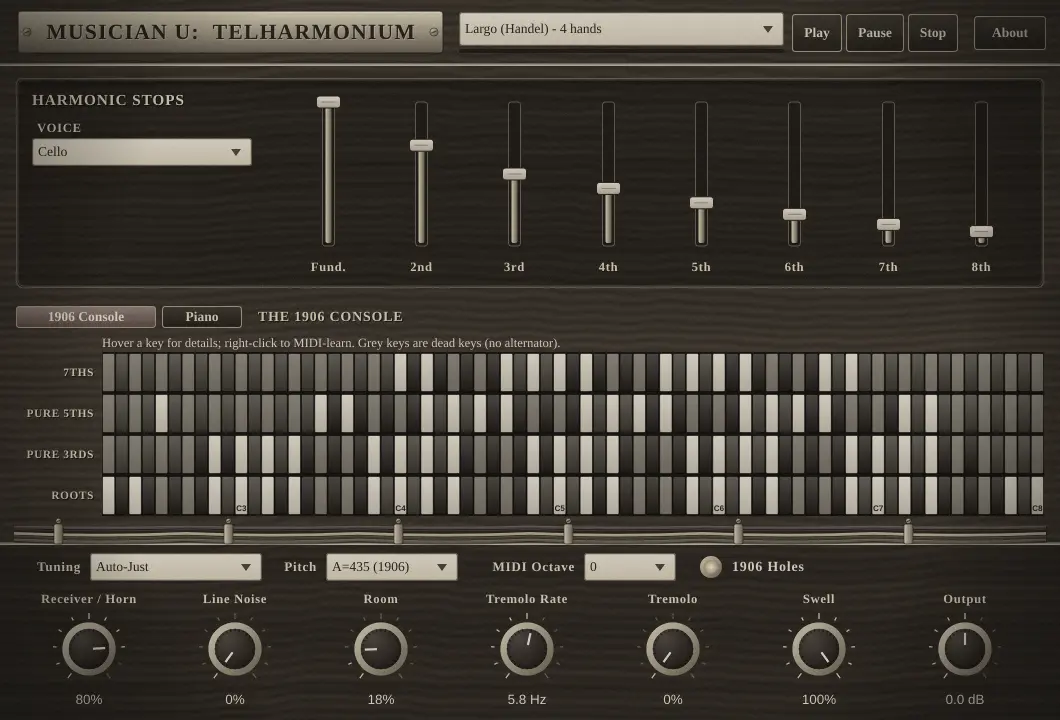
The Musician U: Telharmonium instrument: eight harmonic stops, the four-row 1906 console, and controls for the receiver and horn, line noise, room, tremolo and swell
VST3 instrument and standalone app for Windows: play it from your MIDI keyboard, the 1906 console, or let it play the documented songs.

Before radio

Music, live, down the telephone line

Thaddeus Cahill patented the Telharmonium in 1897. His second machine, built at the Cabot Street Mill in Holyoke, filled a building: 145 steel wheels spinning on eight long shafts, each wheel humming one pitch as an electric current. Players at a keyboard console mixed those currents into tones and sent them down telephone wires.

In 1906 it moved to Telharmonic Hall on Broadway in New York. Restaurants, hotels and homes listened through telephone receivers fitted with large horns. Mark Twain heard it, then had it piped into his New Year's Eve party. It was playing Auld Lang Syne as 1907 arrived.

It was too big, too costly, and it bled into ordinary phone calls. The amplifier made it obsolete, and all three machines were scrapped. This instrument brings its sound back.

“Ask the players for fife music and they play Dixie for you with the squealing of the pipes deceptively perfect.”Ray Stannard Baker, McClure's Magazine, 1906
“The frequencies obtained vary from 40 to 4000 cycles.”Addams S. McAllister, Electrical World, 1907
“It is interesting to observe how the resultant C is still heard when the ground tone has been practically all shut off.”Robert Hope-Jones, organ builder, 1908
Recorded straight from the instrument

Hear it

The pieces newspapers and magazines reported hearing on the Telharmonium, played through the receiver and horn. Headphones help.

  1. Auld Lang Syne

    Playing at Mark Twain's party as 1907 arrived. Four hands: oboe melody, flute below.

    0:29
  2. Bridal Chorus (Wagner)

    Played for Twain at Telharmonic Hall, December 22, 1906. Four hands: trumpet melody, clarinet below.

    0:27
  3. Dixie

    Asked for "fife music" in Holyoke, 1906, the players gave Dixie. Piccolo voice.

    0:45
  4. Largo (Handel)

    Played to investors by phone, Washington to Baltimore, around 1902. Four hands: clarinet melody, French horn below.

    1:00
  5. William Tell Overture, finale

    Reported bursting into New York phone calls, and into Navy wireless. Trumpet voice.

    0:30
  6. Träumerei (Schumann)

    Praised in 1906 for its "exquisite effects." Cello voice, said to be the machine's best.

    1:00
  7. Arkansas Traveler

    Heard in Holyoke, 1906, "from Bach and Schubert to the Arkansas Traveler." Flute voice.

    0:24

The horn, the line, the room

What they actually heard

Nobody in 1906 heard the alternators directly. They heard them through a telephone receiver with a horn on it, in a hotel dining room or a parlor. The instrument models that whole chain. Switch while it plays.

Through a telephone receiver and a large horn: the low end thins out, the mids push forward, and the horn adds its own resonance. This is the instrument's default sound.

Auld Lang Syne, four hands. All three clips are matched in loudness, so you hear the difference in tone, not volume.

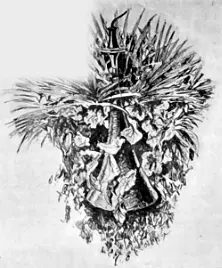
Engraving of a telephone receiver horn hidden in a hanging basket of leaves and flowers
“An ordinary telephone receiver to which a horn amplifier is applied, concealed by foliage or flowers.”
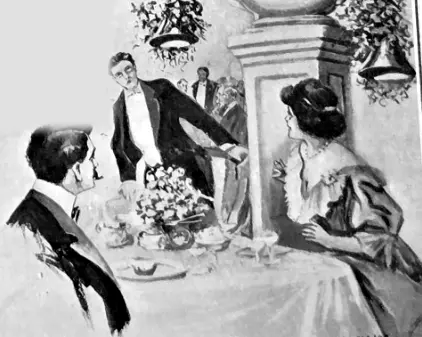
Engraving of diners at a restaurant table, with flower-covered horns hanging overhead
Diners listening, the horns hanging overhead among the flowers. Both: Scientific American, March 9, 1907.

Built from the record

Every pitch comes from Cahill's own wheels

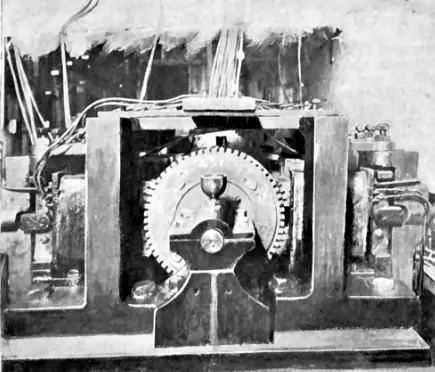
Each alternator was a steel wheel with teeth on its rim. Every tooth passing a coil made one vibration. Count the teeth, know the shaft's speed, and you know the pitch exactly. Here is the C shaft's lowest wheel.

  1. 4 teethon the smallest wheel of the C shaft
  2. × 32.33turns of the shaft every second
  3. = 129.33 Hzfour vibrations per turn
  4. Low Ctuned to A=435, the 1906 standard
Engraving of one of the Telharmonium's alternators: a large toothed wheel turning between coils
One of the alternators: the toothed wheel turns past the coils. Scientific American, March 9, 1907.

All 18 wheels on a shaft spun together, so their pitches were exact whole-number ratios: 8 teeth gives the octave, 12 the pure fifth, 10 the pure major third. That gave Cahill a built-in harmonic series to mix tones from, and chords purer than a piano's. The instrument uses the real tooth counts of all 145 wheels, so its notes and its tuning are his.

Taken from the record

  • 8 pitch shafts and 145 alternators, with their tooth counts
  • A=435, the pitch the machine was tuned to
  • The notes it could not play, left silent
  • The "phantom" bass octave, heard but never generated
  • Pure thirds and fifths mixed with equal temperament
  • Eight harmonic stops for mixing tone
  • Four keyboards, 36 keys per octave
  • Telephone receivers with horns
  • The instruments it imitated, and the pieces it played

Worked out by us

  • Where each shaft sat in register, deduced from two period descriptions
  • The stop settings for each voice: the method was described, the settings never were
  • The exact sound of the receivers and horns
  • How fast notes start, the tremolo, the room
  • Which key played which wheel
  • The arrangements, including the four-hands parts

Main source: Reynold Weidenaar, "The Alternators of the Telharmonium, 1906," from Cahill's own records, checked against Cahill's patents and the newspapers and magazines of 1906 and 1907. Every claim in the instrument's About page says whether it is documented or designed.

1897 to 1914

The Telharmonium story

  1. 1897

    A patent for "electrical music"

    Thaddeus Cahill, a 30-year-old inventor, patents a way to make music from alternating current and deliver it by telephone.

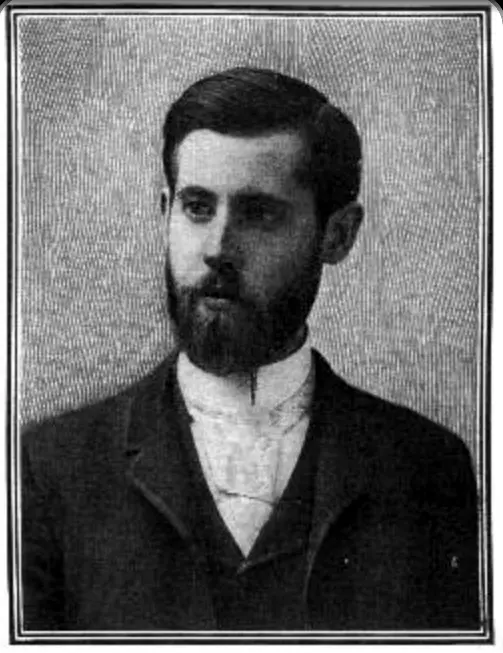
    Portrait engraving of Thaddeus Cahill, a young bearded man in a dark jacket
    Thaddeus Cahill. McClure's Magazine, July 1906.
  2. c. 1902

    Largo, by phone

    A prototype in Washington plays Handel's Largo to businessmen listening in Baltimore. They put up $100,000 toward the full-size machine.

  3. 1906

    Holyoke, Massachusetts

    The Mark II is built and first demonstrated at the Cabot Street Mill: about 200 tons, with 145 alternators and a keyboard console. Ray Stannard Baker of McClure's hears Bach, Schubert, Dixie and the Arkansas Traveler.

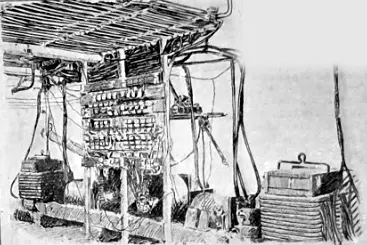
    The Telharmonium's alternators in Holyoke
    The alternators in Holyoke, 1906.
  4. 1906

    Telharmonic Hall, New York

    The machine moves on about 30 railroad cars to 39th Street and Broadway. Subscribers in hotels, restaurants and homes listen through receivers fitted with horns.

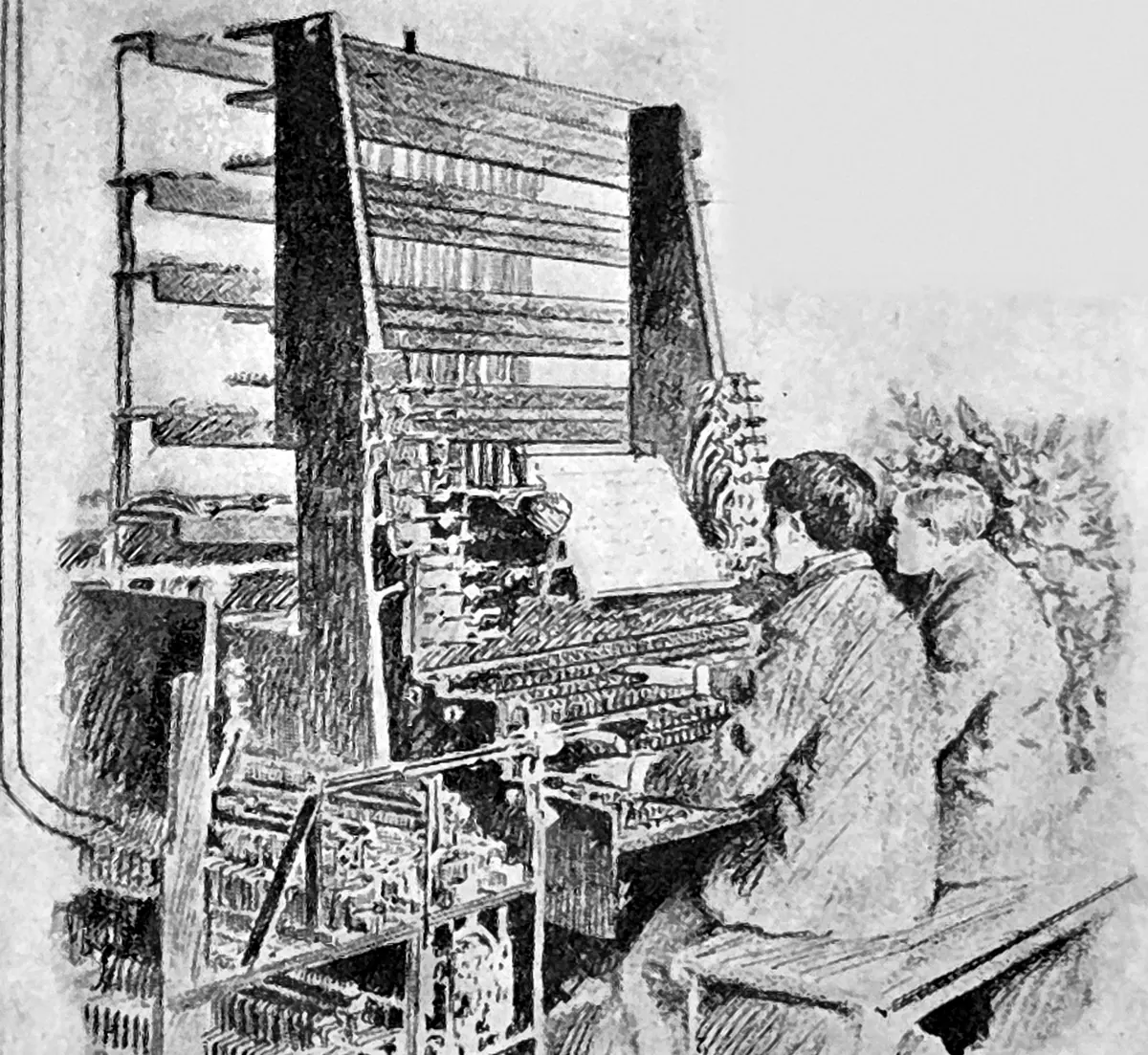
    Engraving of two players seated side by side at the Telharmonium console
    Two players at the console. Scientific American, March 9, 1907.
  5. Dec. 1906

    Mark Twain listens

    Twain hears Wagner's Bridal Chorus at the Hall on December 22, then has the music piped to his New Year's Eve party. He boasts he is "the first man" to have it in his house.

  6. 1907

    In the papers, and on the wires

    Electrical World covers the machine, and Scientific American puts it on its cover. Its music also bursts into ordinary phone calls, and into Navy wireless.

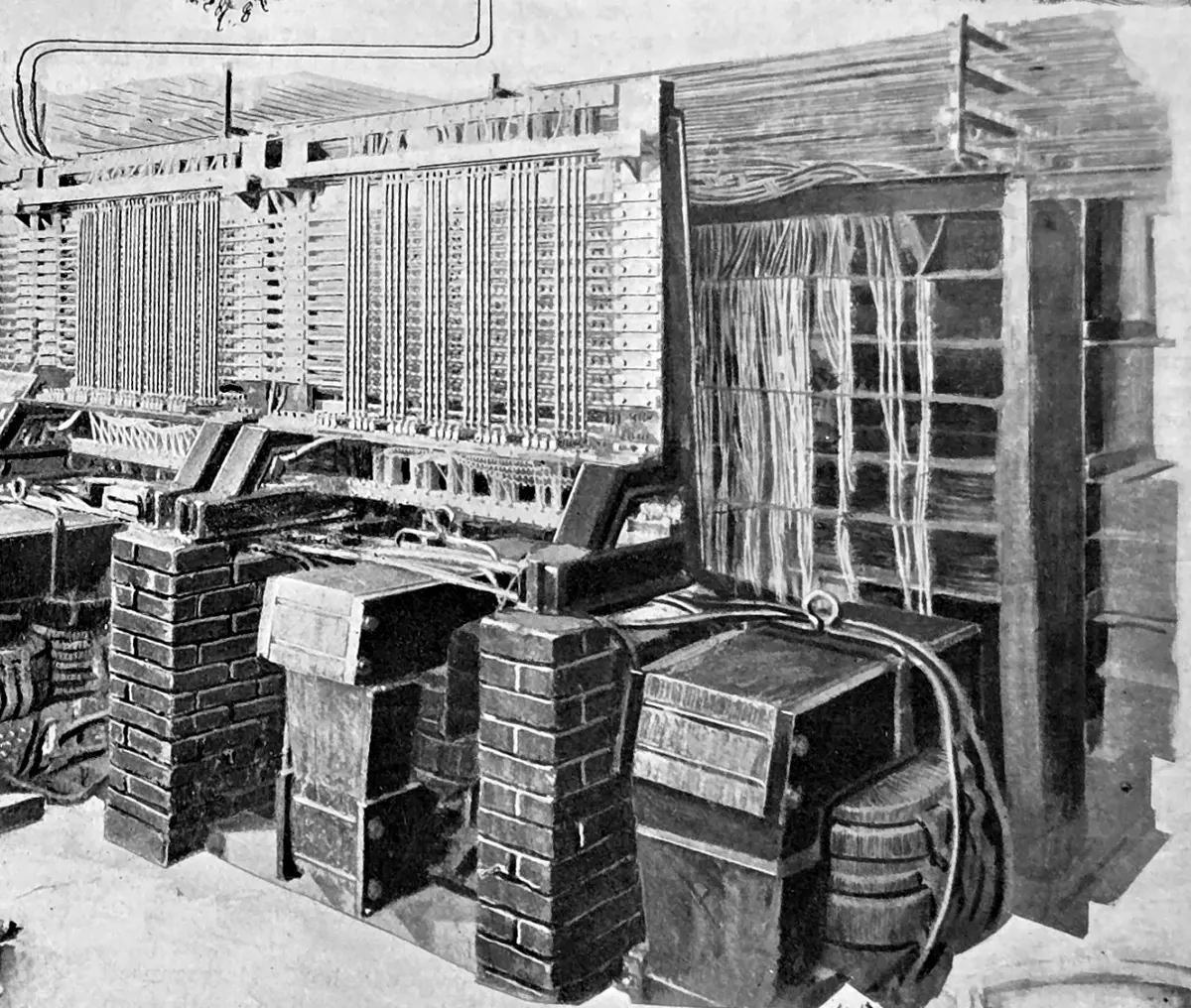
    Engraving of the Telharmonium's long banks of transformers and wiring
    “The banks of transformers by which fundamental and overtones are mixed.”
    Engraving of the Telharmonium's final tone mixer, a frame of switches and cables
    “The final tone mixer.”

    Engravings from the cover of Scientific American, March 9, 1907. Original issue from the Musician U collection.

  7. 1908 to 1914

    The end of the line

    Telharmonic Hall closes in 1908. A Mark III is built, but the business fails. All three machines are scrapped. No recording was ever made.

Musician U on YouTube

The Telharmonium episode

We filmed where it was built, in Holyoke, read the 1907 Scientific American, and played the instrument on camera. The episode is coming soon.

Subscribe on YouTube

Documented songs, built in

Press Play in the instrument and it performs the pieces reported on the Telharmonium, in the order they were heard.

WhenPieceWhere it was reported
c. 1902Largo (Handel)Washington to Baltimore by phone, for investors
1906DixieHolyoke, as "fife music" (McClure's)
1906Arkansas TravelerHolyoke (McClure's)
1906Träumerei (Schumann)Holyoke (McClure's)
Dec. 22, 1906Bridal Chorus (Wagner)For Mark Twain at Telharmonic Hall (New York Times)
Dec. 31, 1906Auld Lang SyneTwain's New Year's Eve party (New York Times)
1907William Tell Overture, finaleHeard bleeding into phone calls and Navy wireless
BonusAmericaA period favourite; no source names it

Everything in the box

Get the Telharmonium

One payment, no subscription.

Musician U: Telharmonium

Coming soon

  • VST3 instrument and standalone app
  • Seven documented songs, plus a bonus
  • Royalty-free for commercial work
  • The full history, built into the About page
Coming soon: follow on YouTube

Windows first. Mac to follow.

What you need

System
Windows 11, 64-bit
Plugin
Any DAW that loads VST3 instruments
Playing
A MIDI keyboard helps; your mouse works too
Listening
Headphones or good speakers
Imagination
A hotel dining room in 1906, a horn on the table, and the whole city wired for sound

Questions

Is this exactly what the Telharmonium sounded like?

No one can say that, because no recording exists. What we can say: every pitch comes from the machine's real alternator tooth counts, so the notes and the tuning are Cahill's. The tone colours and the receiver sound are our best reconstruction from the descriptions of the time.

Why does it sound like a telephone?

Because that's how everyone heard it. The music was delivered over phone lines and played through receivers with horns. Turn the Receiver / Horn knob down to hear the raw electrical tone.

Why are some notes silent?

Cahill planned 12 pitch shafts but only built 8, so the real machine was missing notes. With 1906 Holes on, you hear it as built. Turn 1906 Holes off to play every note.

Why A=435?

That was the pitch standard the machine was built to. You can switch to A=440 to play along with modern instruments.

Is there a Mac version?

Not yet. Windows comes first, with Mac to follow.

Can I use what I make commercially?

Yes. Musician U claims no ownership of the music you make with it, and there are no royalties. See the license.

Something isn't working. Who do I contact?

Email themusicianu@gmail.com.